The Government should scrap the Chagos deal and spend the cash saved on our own Armed Forces
Few Telegraph readers would disagree with the proposition that the world is becoming a more dangerous place.
And so they will no doubt be shocked to hear reports from this paper that the armed forces are being told by Labour to find more than £2bn of “savings” in the current financial year. This effectively means cuts when we should be backing our military to the hilt.
All this just as the threat we face is drawing ever closer. I have long said that Putin’s aggression extends beyond Ukraine. His fighter planes and drones have repeatedly violated the airspace of Nato allies, Russian spy vessels have been active in our waters and state involvement in recent cyber attacks has not been ruled out.
The Russian president is testing our resolve; seeing where our weaknesses lie.
In response, we must show strength; we must demonstrate in hard terms that we have the resolve to stand up to him. Every effort in government must be focused on delivering that clear message, which ultimately means boosting deterrence.
This makes the widening gulf between Labour’s rhetoric and reality when it comes to defence all the more troubling.
Let’s not forget that in February, just before visiting Donald Trump in Washington, Keir Starmer gave a statement to Parliament in which he promised to increase defence spending to 2.6 per cent of GDP by 2027.
Not only that, in June Labour promised to go further, increasing spending on national security to 5 per cent, including 3.5 per cent on “core” defence spending and 1.5 per cent on “security and resilience”.
We all want to see higher defence spending. Just like with Ukraine, there should be consensus between the main parties on national security. Nigel Farage may continue to say Nato expansion is partly to blame for the war in Ukraine, but we have stood shoulder to shoulder with the Government in backing Kyiv’s fight for freedom – just as Labour did with us when it was in opposition.
The lack of urgency from Labour on our own defence matters, however, is another matter.
In reality, the 2.6 per cent boost promised for 2027 is flattered by adding the intelligence budget to our declared Nato defence spending, making our funding for the military look bigger than it actually is. Classic smoke and mirrors.
And their further promises of 3 per cent, 3.5 per cent and 5 per cent are all unfunded and rely on elaborate Treasury trickery; reclassifying existing spending as defence, rather than taking tough decisions on welfare to give the Armed Forces the hard cash they urgently need.
As a result, instead of rapidly rearming, British defence procurement is effectively frozen.
At September’s DSEI in the Docklands, our largest defence trade event, every British defence supplier I spoke to was frustrated by the lack of signed contracts and actual orders.
In March, when I asked how many new drones the Armed Forces had purchased under Labour, the answer was staggering. It was three. Three drones for our Armed Forces, an Armed Forces that should be leading the drone revolution.
As a former defence procurement minister who saw first hand the extraordinary effort we undertook in government to arm Ukraine – at breathtaking scale and pace – I know we could be one of the world’s leading players in uncrewed warfare.
But Labour’s procurement freeze has created a parallel universe: we provide Ukraine with huge quantities of highly effective drones and counter-drone tech, often made by British companies, yet fail to buy the same kit for our own Army.
So if Labour are not procuring, then what have they been doing?
The answer: scrapping our Legacy Act and reigniting lawfare against our brave Northern Ireland veterans. Surrendering sovereignty over the Chagos Islands and spending billions to lease back the vital base on Diego Garcia.
Labour should abandon plans to put our Army back in the dock. They should scrap their Chagos deal and spend the cash saved on our own Armed Forces. They should unlock procurement and show our adversaries that we are not afraid to stand up to them.
They should prioritise the first duty of government – defence of the realm.
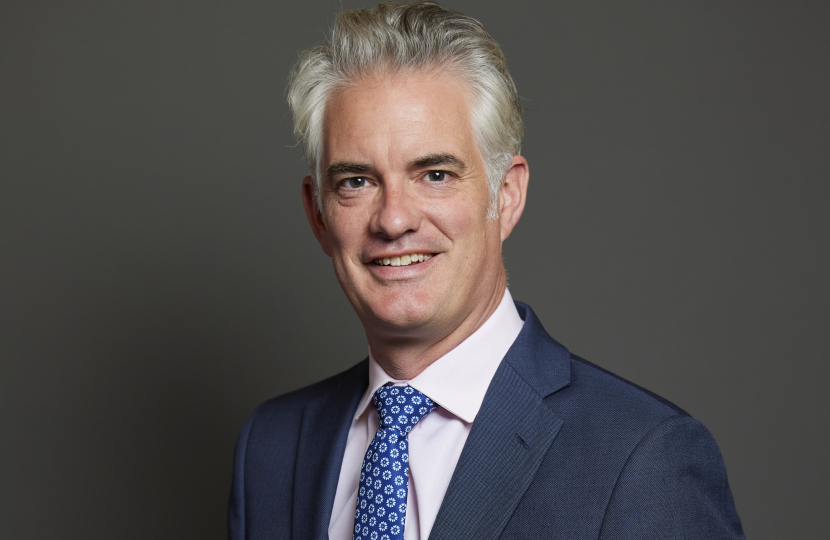
James Cartlidge is shadow secretary of state for defence
Published in The Telegraph.