I make no apology for devoting a number of my EADT columns to the number one issue for many of my constituents: the cost of living. Not only did headline inflation rise again last month, but recent data shows significant pressure on the most basic staple of all - food. And that’s before we get on to the perennial matter of heating bills, and the unique pressures faced by rural households that rely on large, one-off cash-flow hits, such as those using heating oil.
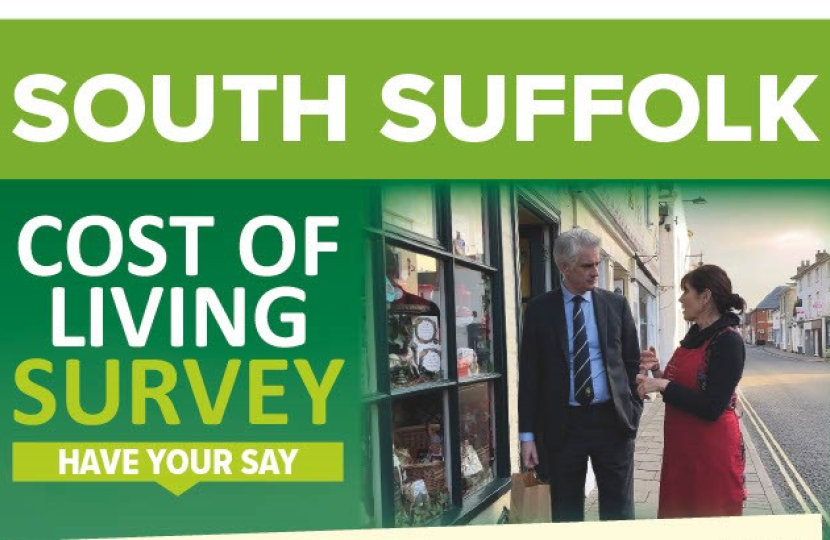
In an effort to better understand how financial pressures are impacting my constituents in their daily lives, I launched my Cost of Living Survey last summer, delivering it to thousands of homes across the towns and villages of South Suffolk. National statistics are important, but they can feel distant. The response was overwhelming, both in volume and honesty, and it gave a clear sense of where the real pinch points lie at a local level.
Perhaps unsurprisingly, given recent data, one concern came through particularly strongly: the cost of food. For many households, food shopping was listed among the top three financial pressures they face. That is why I was concerned to see figures last week showing food price inflation rising again in January, driven by higher prices for essentials such as meat, fish and fruit. This followed news the week before that overall inflation had climbed to 3.4% in December, up sharply from the 2% rate at the time of the July 2024 General Election. For families trying to balance the books, these figures aren’t abstract - they are felt at the checkout, week after week.
People often ask me what, realistically, can be done. When it comes to food inflation, perhaps we would be in a better place if we had a Government that actually supported our farmers. I struggle to understand how the Family Farm Tax is going to help those who - quite literally - put food on our plates. On the contrary, feedback from local farmers is of a sector utterly chilled by fear of future tax bills, a prospect that is existential for farms handed down through generations. Scrapping this tax and getting behind our food producers would therefore be my starting point.
Of course, when it comes to addressing the cost of living, there are two sides to the coin. Yes, there is the critical issue of the costs people face - but there is also the policy question of giving people the means to cope. In other words, how do we deliver an economy that pays good wages, so that people genuinely feel better off and can afford a reasonable standard of living?
The quality of education is paramount. As such, securing a new school building for my largest constituency town - Sudbury - has long been a priority for me, and I was delighted to secure funding for the rebuild of Ormiston Academy in July 2022. During a visit earlier this month, it was encouraging to hear that the new sports hall is expected to be completed later this year, before work moves on to the main school building. Good facilities matter - not just for academic outcomes, but for confidence, aspiration and opportunity.
Sudbury’s other secondary school, Thomas Gainsborough School in Great Cornard, has clearly benefited from having modern facilities. I know this firsthand, as all four of my children have attended TGS. However, I want both secondary schools in the town to have modern campuses, capable of maximising the life chances of those who attend.
But even with strong education provision, its ability to boost life chances will be undermined if the Government of the day fails to deliver a strong economy - especially one with an abundance of well-paid jobs. Alongside good schools, we need a vibrant environment for business, giving entrepreneurs the confidence to invest and create the prosperity we all depend on. It is therefore a massive disappointment that Labour continues to make only limp attempts to deliver on its pre-election promises to prioritise growth.
So whether it is farmers and factories, or high-street shops and pubs, it always comes back to delivering a more pro-business climate - backing wealth creators rather than burdening them with ever-higher costs, such as Labour’s Job Tax and its costly Employment Bill, which risks shrinking vacancies and doing precisely the opposite of what is intended.
Finally, when we talk about businesses like pubs and family farms, it reminds us that the economic challenge is not about spreadsheets and dry accountancy, but about the very fabric of our communities. Imagine how much worse our quality of life would be without the countryside being managed by our farmers, or without village shops and pubs. That is why the economy matters, and why we need a far better approach from the Government to support our rural communities and truly address cost-of-living pressures.
Published in the East Anglian Daily Times.