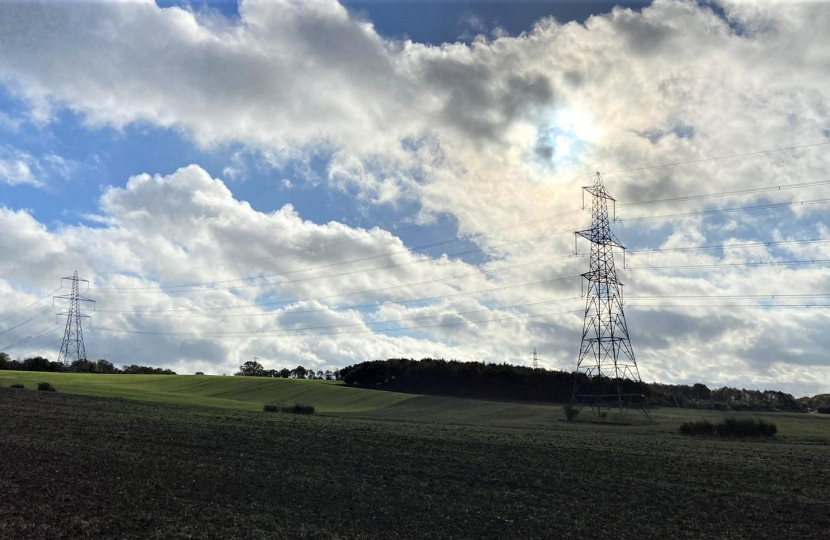
National Grid’s planning application for 180km of pylons from Norwich to Tilbury, which would cut through lots of Suffolk villages, is to go to the Planning Inspectorate.
At the end of August, National Grid submitted their application for a development consent order (DCO) for their Norwich to Tilbury pylon proposals.
As the proposals are known as a ‘National Infrastructure Project’, they have to apply for planning from the Planning Inspectorate rather than the local authority.
Yesterday the Planning Inspectorate accepted the application for examination, and will now appoint an Examining Authority which will hold a six-month examination of the application.
Norwich to Tilbury has faced a huge amount of opposition from local campaigners, farmers, and local MPs, including South Suffolk MP James Cartlidge, who’s constituency includes villages such as Hintlesham and Chattisham, Sproughton, Stratford St Mary, and Raydon, who are set to receive swathes of pylons across their villages and nearby countryside.
James Cartlidge MP says: “As we expected, National Grid have applied for planning permission to build 180km of pylons across the countryside from Norwich to Tilbury.
“Now that the planning inspectorate has accepted the application for examination, I would urge all of my affected constituents to register to have their say on the proposals on the planning inspectorate’s website.
“As readers will know, I have long opposed these plans for swathes of pylons across our beautiful countryside – not least because the ESO study into transmission options for East Anglia, which I pushed hard for, showed that underground HVDC was cost comparable to pylons.
“I’ve consistently campaigned both in Parliament and in the constituency for a fairer deal for my constituents – and I will continue to do so.”
Local residents, landowners and stakeholders will be able to register an interest so they can provide comments and take part in the examination period.
Following examination, the Examining Authority will prepare a detailed report along with its recommendation to the Secretary of State for Energy Security and Net Zero.
The Secretary of State then has three months to decide whether to approve the application. It is expected that the whole process will take around 18 months.