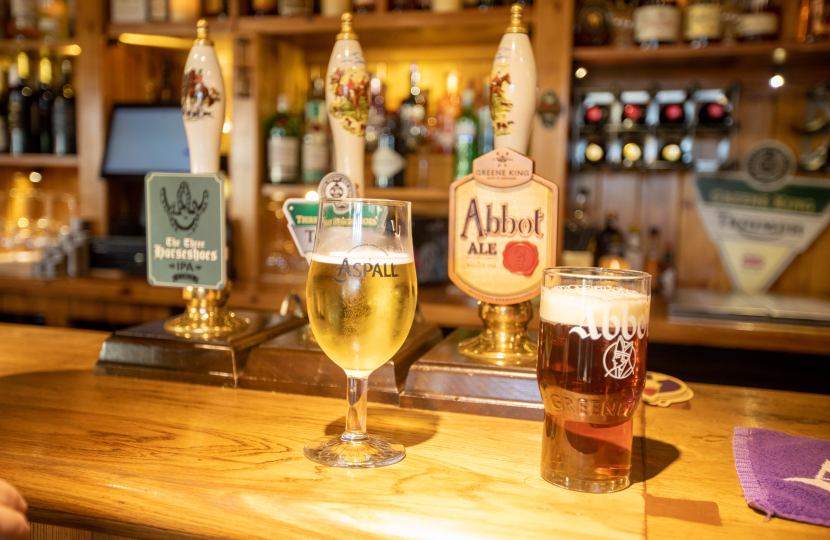
Few would disagree with the idea that we should support our Suffolk pubs – but putting that in practice is far from easy, when those who run our hospitality businesses are genuinely struggling with seemingly endless increases in taxation and running costs. One way I’ve tried to help was spending November and December visiting local landlords, and hearing of their challenges – above all, using my social media to promote their establishments, and to stress the refrain we should never cease from saying, that with any pub it’s very much a case of ‘use it or lose it’.
In the final weeks of 2025, I undertook ‘MP visits’ to: the Three Horseshoes in Cockfield; the Brewery Tap in Sudbury; and the Crown in Hartest. Of course, this doesn’t include those hostelries I visited socially and with my family, or just for lunch during a busy constituency day – from my own local, the revitalised Shoulder of Mutton in Assington, to one of our most iconic riverside settings, the Butt and Oyster at Pin Mill, Chelmondiston.
In every case, the management was determined to succeed – but was finding the reality a frustrating, uphill battle. Business rates is a key example: pubs across England were set to face a sharp increase in their bills after the Chancellor’s Autumn Budget last November. The 5p discount for every £1 paid in business rates - only a quarter of the 20p discount previously legislated for – was due to fall far short of what is needed to provide meaningful relief. That modest saving will not offset the above-inflation rise in rates due in April, nor compensate for the steep reduction in support for the hospitality sector - which was cut from 75% under the previous Government to 40% under this one and is due to end entirely in just a few months.
Indeed, UK Hospitality has calculated that an average pub’s business rates will still rise by 15% this year - an extra £1,400. By 2028/29, as the relief tapers off, these figures will climb even higher, with pubs facing a 76% overall increase. To be clear, business rates is not like corporation tax, paid if a business succeeds and makes a profit – ‘if only’, in most cases. Rather, rates are a guaranteed cost, an absolute hit to the business in question.
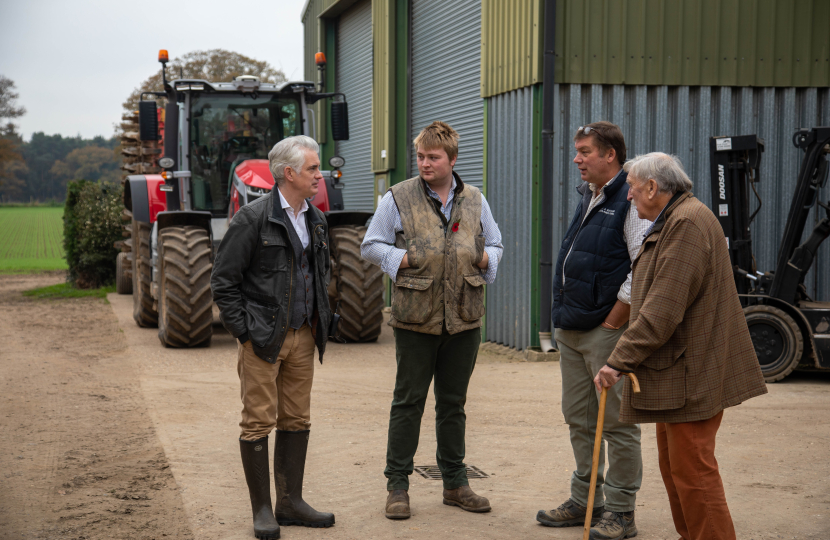
That is why last week’s decision by the Government to reduce their business rates hike was welcomed by the sector. In fact, U-turns are becoming ever more common. I’ve campaigned relentlessly to back my farmers against the terrible Family Farm Tax, and I also welcomed the partial climbdown delivered just before Christmas. However, when I hosted farmers from across our region in the House of Commons on Monday, it was clear that they would still face a massive threat to their farm business – handed down the generations – even with the increase in the threshold where the new tax change will kick in.
The constant U-turns underline something more profound – I fear Keir Starmer doesn’t have a proper plan, and so they chop and change from day to day. I accept 100% that my Party deserved the historically bad result we got in July 2024, but that was after fourteen years, including coming to power with the country near bankrupt in 2010, and then governing through a pandemic, immediately followed by war in Europe.
Kemi on the other hand, does have a plan. In Government we actually made huge progress reducing welfare bills until the pandemic struck, but in the wake of it, we had a huge spike in mental health claims, and it must be obvious to anyone that we’ve got to reverse the rising benefit bills. So, we’ve set out a detailed plan to do just that and spend some of the savings from slashing business rates. Quite simply, it’s about transferring money from subsidising people not to work, to powering up the productive part of our economy.
People may disagree with this or have concerns about the impact of serious welfare reform. All I would say is that we literally cannot go on like this, spending ever more on making people dependent on the state, when we should be diverting that cash to the opposite: firing up the mojo of private enterprise which is the only way we can actually create prosperity that lasts.
When it comes to hospitality, this would also help reverse the trend of falling vacancies and rising unemployment. So, it’s a case of three cheers for our pubs in 2026 – and I wish all readers well for the year ahead.
Published in the Suffolk Free Press.